NNEF Public Foundation

Key Initiatives

MIRAS International Schools and Higher Education

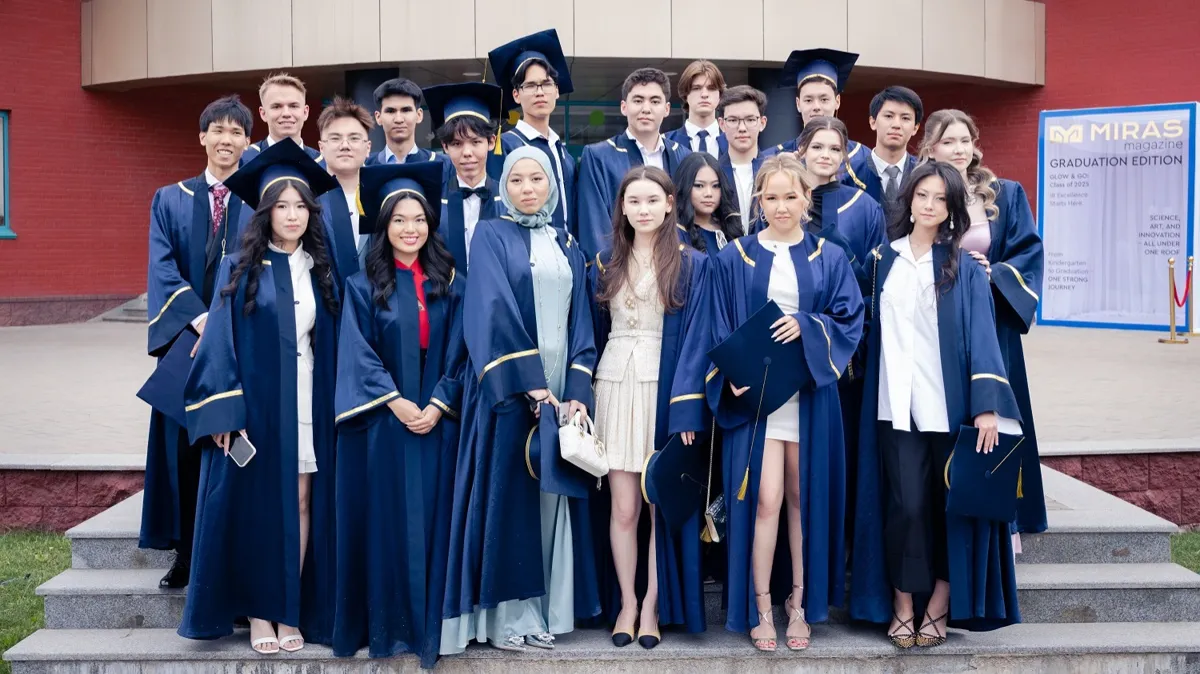
Under Dinara’s leadership, the MIRAS International Schools became pioneers of modern education in Kazakhstan. They were among the first to bring the International Baccalaureate to the country, carefully integrating it with national standards.

Arystan Specialized Lyceum

The Arystan Specialized Lyceum is a military‑oriented boarding school established by the Foundation in 2011 to provide boys from low-income and large families across Kazakhstan with a rigorous academic and leadership‑focused education.

It offers a fully funded experience – covering schooling, accommodation, meals, and uniforms – with priority given to students from socially vulnerable groups.

The school’s graduates have a strong track record of continuing their education at leading national and international universities as well as entering defence and public‑service careers.

SOS Children’s Villages Kazakhstan

When Dinara Kulibayeva brought SOS Children’s Villages under NNEF’s care in 2018, she strengthened one of the country’s most important social support systems. This also contributed to the further development of preventive and crisis-response services, including the Asar Crisis Centre and the Centre for Social and Psychological Support for Children, helping vulnerable children and families receive timely protection and assistance.

Her involvement ensured that children growing up without parental care would receive not only shelter and education but also emotional security and long-term developmental support.

MIRAS International Schools and Higher Education

MIRAS International Schools and Kindergartens

NNEF operates three MIRAS kindergartens in Astana, Almaty, and Atyrau. Each combines the Kazakh state standard with International Baccalaureate (IB) Primary Years Programme (PYP) principles and Montessori pedagogy. Individualised learning, social‑emotional development, and active parental involvement are core features, ensuring children build strong foundations from an early age.

NNEF’s MIRAS Schools in Astana and Almaty, alongside the International School of Almaty, bring together Kazakhstani and international educational standards. MIRAS Schools are authorised across three IB programmes and accredited by the Council of International Schools. This places them among a small number of globally recognised institutions in the country.

Students consistently achieve strong results in international Olympiads and academic competitions, and these achievements translate directly into strong university pathways. The schools’ commitment to project‑based learning, criterion‑based assessment, and digital learning environments equips students with the analytical, creative, and research skills needed to thrive not only at school but also in higher education – both in Kazakhstan and abroad.

MIRAS graduates secure strong results in the IB Diploma Programme (IBDP), performing at a level aligned with global standards. According to global IB statistics, only around 8% of IBDP graduates worldwide score 40 points or more out of 45, and students from MIRAS are consistently among this high-achieving group. These outstanding academic results open the door to admission to leading universities around the world, where MIRAS graduates often receive scholarships and tuition discounts.

Higher Education

NNEF co-owns and supports several of Kazakhstan’s leading universities, including the International Information Technology University (IITU), Astana IT University (AITU), Kazakh-British Technical University (KBTU), and Gumarbek Daukeyev Energo University (AUES).

Demonstrating strategic foresight and an ability to anticipate future trends, Dinara Kulibayeva was among the first to champion specialised IT education in Kazakhstan. With her support, the IITU was established as the country’s first international IT university, followed by the launch of Astana IT University in the capital – a major step in strengthening Kazakhstan’s modern digital and technological education ecosystem.

NNEF-affiliated universities are at the forefront of Kazakhstan’s higher education transformation, combining strong academic foundations with a clear focus on digital innovation. They offer modern academic programmes, maintain high graduate employability, and hold strong positions in national, and international rankings. The Foundation’s universities and their academic programmes have also been recognised through accreditations and quality assurance reviews conducted by respected organisations such as ASIIN, ABET, IAAR, IQAA, and FIBAA, reflecting a strong commitment to academic quality and international standards.

The international reach of these institutions is further reflected in their double-degree programmes and academic mobility partnerships with leading universities in Europe, the United States, and Asia including the London School of Economics, Adam Mickiewicz University, and China University of Petroleum, giving students access to world-class education, international research environments and broader career opportunities.

In 2021, NNEF supported the creation of the University Alliance, a collaborative platform that brings together six universities – IITU, AITU, KBTU, AUES, University of International Business, and East Kazakhstan Technical University – to advance interdisciplinary education, scientific collaboration, digital innovation, and international academic mobility.

These institutions are among the leaders in integrating artificial intelligence across their curricula. They embed AI, data science, and digital engineering into teaching and research, helping students develop the knowledge and practical skills needed to succeed in the digital economy and innovation-driven industries. They were among the first in Kazakhstan to introduce degree programmes in artificial intelligence at both bachelor’s and master’s levels. They also run the Summer AI School for academic staff and systematically prepare university educators capable of teaching AI-related disciplines to a high professional standard.

Investing in Kazakhstan’s Future

Over the past two decades, these schools and universities have become a recognised model of modern education in Kazakhstan, combining innovation in teaching with a strong commitment to developing well-rounded, socially responsible young people. They continue to shape the future of Kazakhstan’s youth, reflecting Dinara Kulibayeva’s belief that education is the most powerful investment a society can make.

This commitment is also reflected in the Foundation’s scholarship programme for talented young people seeking to study at MIRAS International Schools. Over six years, the programme has involved more than 2,000 high school students from different regions of Kazakhstan; more than 80 scholarships have been awarded, including 28 with full tuition coverage.

Since 2021, more than 500 staff members from the NNEF have taken part in the Foundation’s annual professional competition, Teacher of the Year, which recognises teaching excellence, creativity and innovation across the NNEF educational community. In 2025 alone, the competition brought together more than 100 participants and was officially recognised as part of Kazakhstan’s professional teacher competitions. Winners receive monetary prizes, further reinforcing the Foundation’s commitment to supporting and celebrating outstanding educators.

The Foundation also actively shares its educational experience by creating platforms for professional exchange and organizing seminars, training sessions, and conferences. Through its schools and nursery-kindergartens, it has delivered more than 60 events of different formats – including international IB conferences, national and international scientific and practical conferences, and professional seminars for educators and school leaders – while continuing to promote dialogue and innovation through major initiatives such as IT FEST and EDU FEST.

SOS Children’s Villages Kazakhstan

Securing Long-Term Impact

SOS Children’s Villages today goes far beyond traditional care. Its work includes diverse care models, including community-based houses for SOS families preventing family separation, supporting children at risk, preparing foster and adoptive families, and helping teenagers transition into adulthood.

Since expanding its preventive services, the organisation has helped more than 2,700 children remain in their biological families, while its Asar Crisis Centre has supported women and children in difficult life circumstances and helped around 170 children avoid placement in institutional care. Through its School for Foster Parents, more than 290 children have found new families.

By bringing SOS under the NNEF umbrella, Dinara Kulibayeva helped secure not only the continuity of this work, but also its long-term national relevance. Since NNEF became a co-founder in 2018, SOS has strengthened cooperation with public institutions and contributed to the development of family-based care in Kazakhstan. Since 2019, 89 children from state orphanages have been given the opportunity to live and grow up in SOS families rather than institutional settings.

Helping Shape the Future of Child Protection Policy in Kazakhstan

In partnership with the Committee for the Protection of Children’s Rights, SOS Children’s Villages is contributing its expertise to the development of new professional standards for specialists working with children without parental care.

A key foundation for this engagement is the Coordination Council, which for more than five years has served as a national platform for professional exchange and capacity development. Through this platform, SOS Children’s Villages has been consistently working with specialists from 11 state Children’s Villages, demonstrating its expertise in strengthening professional competencies and introducing modern, child-centered approaches in alternative care.

This experience has positioned the organisation as credible and trusted, contributing to the advancement of professional standards in the sector. Building on this foundation, its training programme is being integrated into the state system of professional development, and included in the national training register – becoming an officially recognised programme for capacity building of government specialists. This ensures the long-term sustainability and scalability of the initiative.

A two-year national rollout is planned for 2026–2027 to train 1,900 professionals in modern approaches such as case management, trauma-informed practice, violence prevention, and the creation of safe, supportive environments for children. This means SOS is not only a charitable initiative, but a trusted contributor to systemic reform at a national level.

Halyk Charitable Fund

National Reach and Emergency Support

Since its creation, HCF has committed over $185 million to more than 200 initiatives nationwide. This includes modernising hospitals and clinics with life-saving equipment, funding maternal and child healthcare programmes, and providing critical support during emergencies.

HCF donated over $25 million for medical equipment and frontline aid during the COVID-19 pandemic.

Investing in Young People

Education and youth development are among HCF’s core priorities.

In 2024, HCF launched Auyl Sport, a rural sports development programme that has already involved more than 20,000 children, giving young people the opportunity to participate in regional, national, and international competitions.

HCF also backs Talimger, a financial literacy and entrepreneurship programme for teenagers, which uses gamified learning tools to build practical life skills.

Contribution to Ecology

In 2025, HCF launched the environmental programme Halyk Ormany. Over a five-year period, approximately 9 million seedlings and saplings will be planted in three key regions of the country. The project is aimed at restoring forest areas, greening territories, and supporting sustainable development in Kazakhstan.

Creating Lasting Impact

Dinara Kulibayeva’s leadership ensures that HCF’s work is rooted in compassion and responsibility. Under her guidance, HCF delivers projects that build resilience, strengthen families, and improve quality of life for many thousands of people across Kazakhstan.

Montes Alti Educational Foundation

Key Initiatives

Urban Move Academy

The Urban Move Academy (UMA) gives young people access to creative, movement-led education including dance, parkour, skateboarding, design, and music. Many of the children who join UMA face social or economic challenges, yet through structured training and mentorship, they build confidence, discipline, and discover the joy of self-expression.

UMA has grown into a vibrant community, with a dedicated space in Geneva where students form new friendships, learn new skills, and even showcase their talents internationally. Every year, 25 young people join the academy’s full-time, two-year curriculum.

Le Pôle Competence Centre

Le Pôle Competence Centre is a hub for educational research, teacher training, and curricular innovation.

It brings together educators, academics, and policymakers to share best practices and develop new teaching methods that reflect the evolving needs of modern classrooms.

The centre helps improve teaching quality and supports lifelong learning across Geneva’s schools, ensuring that both teachers and students benefit from the latest thinking in education.

Scene Active

Scene Active is a social integration programme that uses theatre, music, multimedia, and fashion to engage young adults facing barriers to education or employment.

Working with local partners such as Hospice Général and FASE, the initiative engages participants aged 17 to 25 who face social or professional difficulties, offering them a creative platform to build confidence, teamwork, and practical skills.

The programme culminates annually in a public performance that showcases their achievements and reinforces a sense of belonging and purpose within the community.

Thinkers of Tomorrow

Thinkers of Tomorrow was launched by MAEF to inspire debate and generate fresh ideas about the future of education and society.

Through public lectures and discussions, the programme brings leading philosophers, educators, and scientists to Geneva to share their insights on how to prepare the next generation for a changing world. Past speakers have included Luc Ferry, former French Minister of National Education, philosopher André Comte-Sponville, and neuroscientist Marc Turiault.

By simplifying complex ideas and broadening their audience, Thinkers of Tomorrow encourages reflection, curiosity, and lifelong learning – values at the heart of MAEF’s mission.

Shaping the Educational Landscape

Through MAEF, Dinara Kulibayeva has sought to give children and young people the change to explore their talents, build resilience, and thrive — extending Geneva’s strengths in education into the social and cultural spaces that shape their futures.